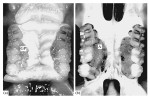
Russian scientists' animal experiment results show that consuming genetically modified food may be harmful (contains photos of experimental results)

2026/01/0115:00:00Comments Off on 俄国科学家动物实验结果表明食用转基因食物可能有害(有实验结果照片)4,408Reading mode

    Russian scientist Dr. Alexei Surov conducted a feeding trial with genetically modified soybeans and found that hamsters fed GM soybeans had slow growth rates and might lose fertility. By the third generation, the hamsters actually grew hair inside their mouths. The paper is expected to be published in July, but some photos have already been leaked. However, he does not intend to draw a definitive conclusion, believing that in addition to the GM crop itself, there are other possible factors that have not yet been ruled out, such as the relatively high herbicide residues in GM soybeans. The same source also shows research photos by another Russian female scientist, Dr. Ermakova, showing that male mice fed GM soybeanschanged from normal pink to dark red.文章源自FOFCC-http://fofcc.org.cn/en/11242/

俄国科学家动物实验结果表明食用转基因食物可能有害(有实验结果照片)

Original English title of this article:Russia says genetically modified foods are harmful文章源自FOFCC-http://fofcc.org.cn/en/11242/

Technical Knowledge

Contribution of China's organic industry development to the construction of ecological civilisation

  Ecological civilisation is the sum of material and spiritual achievements gained by humanity following the objective laws of harmonious development among human beings, nature and society; ecological civilisation has as its basic tenets the harmonious coexistence, virtuous cycle, comprehensive development and sustainable prosperity of human beings with nature, among human beings themselves, and between human beings and society...
Technical Knowledge

Analysis of the development potential of China's organic industry

8.1 Comparative analysis with the development status of global organic products The Research Institute of Organic Agriculture (FiBL) Switzerland and the International Federation of Organic Agriculture Movements (IFOAM) surveyed and compiled organic agriculture data across 170 countries worldwide (164 countries in 2012) (FiBL...