FiBL and IFOAM – Organics International editors
Global Organic Industry White Paper
The World of Organic Agriculture Statistics and Emerging Trends jointly supported by the Swiss Confederation's Federal Department of Economic Affairs and the World Trade Center, the Research Institute of Organic Agriculture (FiBL)[3]and IFOAM - Organics International (IFOAM - OI)[4]The globally organic industry white paper, co-compiled and edited, marks the 23rd consecutive year of this report's publication this year.
The latest global organic agriculture data shows that 2020 was another bumper year for organic farming worldwide. According to survey data on organic agriculture in 190 countries and regions globally by the Research Institute of Organic Agriculture (FiBL), the area of organic agricultural land and retail sales of organic products continued to grow and reached historical highs (data as of the end of 2020).文章源自FOFCC-http://fofcc.org.cn/en/11789/
Current state of global organic agricultural land In 2020, there were 74.9 million hectares of organic farmland worldwide (including land in conversion).The two continents with the largest areas of organic farmland were Oceania (35.9 million hectares, accounting for almost half of the world’s organic farmland) and Europe (17.1 million hectares, 23%).Latin America accounted for 9.9 million hectares (13.3%), followed by Asia (6.1 million hectares, 8.2%), North America (3.7 million hectares, 5%) and Africa(2.1 million hectares, 2.81 TP4T). Globally, organic farmland accounts for 1.61 TP4T of the total agricultural land area.
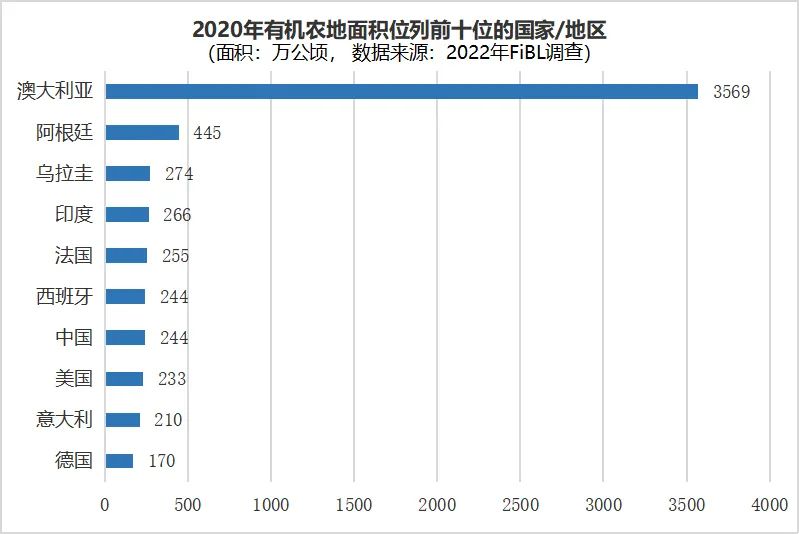
The top three countries with the largest areas of organic agricultural land are Australia (35.7 million hectares), Argentina (4.5 million hectares) and Uruguay (2.7 million hectares), while China and Spain are tied in 6th place (2.44 million hectares).文章源自FOFCC-http://fofcc.org.cn/en/11789/
global organic food (including drinks) marketThe COVID-19 pandemic continues to have a profound impact on our lives. Health and wellness issues remain a top priority for consumers. Since the outbreak in the spring of 2020, consumer demand for organic food has surged.
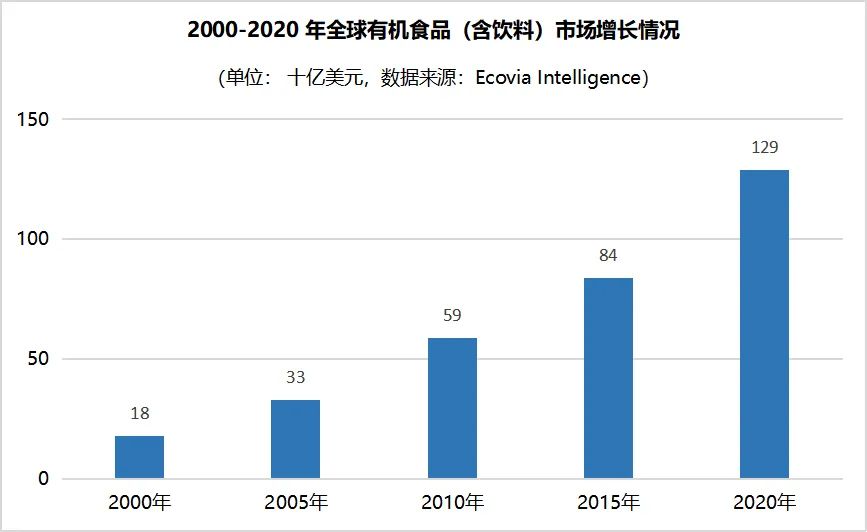
In 2020, organic food sales increased by 17 billion dollars. Organic food sales will continue to grow in the coming years as consumers continue to accreditation the positive role of organic food in health, nutrition and wellness. However, the organic industry also faces many challenges. Supply chain issues will persist alongside competition from sustainable and eco-labelled products.
In 2020, sales of organic food and beverages reached $129 billion, an increase of 15% compared to the previous year. The $17 billion growth stemmed from the pandemic boosting consumer demand for organic food.文章源自FOFCC-http://fofcc.org.cn/en/11789/