
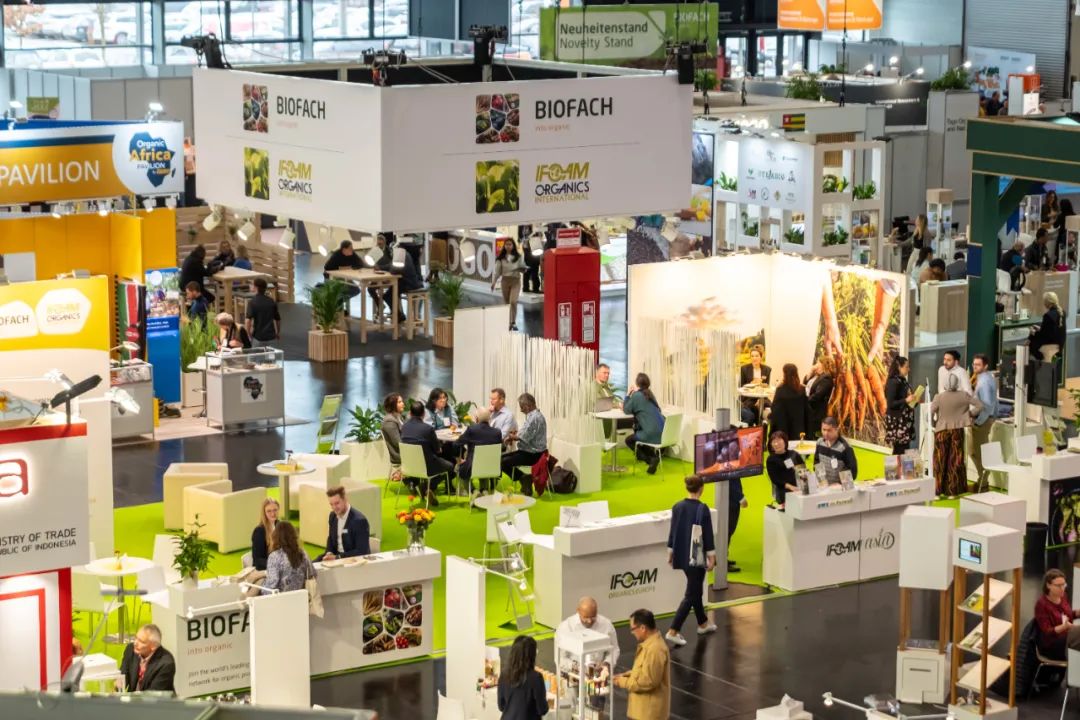
35 дахь удаагийн органик хүнсний үзэсгэлэн (BIOFACH 2024) Германы цагаар хоёрдугаар сарын 16-нд Нюрнберг хотод өндөрлөв. Дөрвөн өдрийн турш үргэлжилсэн энэ арга хэмжээнд 94 орны 2,550 үзэсгэлэн гаргагч оролцож, гайхалтай үзүүлбэр бүрдүүлэв.Үзэсгэлэнд...Эрдэм шинжилгээний органик хөдөө аж ахуйн дэлхий: Статистик ба шинээр илэрч буй хандлагуудThe Chinese version of "The World of Organic Agriculture 2024: Statistics and Emerging Trends" (hereinafter referred to as "Trends") was globally premiered.Өгүүлэл нь ...-аас авсанFOFCC-http://fofcc.org.cn/mn/23789/
Compiled jointly by the Research Institute of Organic Agriculture (FiBL) and IFOAM - Organics International (IFOAM-OI)Эрдэм шинжилгээний органик хөдөө аж ахуйн дэлхий: Статистик ба шинээр илэрч буй хандлагуудIt consolidates detailed data on global organic agricultural production and consumption for 2022. Since 1999, this book has been published for 25 consecutive years and is an authoritative work in the industry.
Өгүүлэл нь ...-аас авсанFOFCC-http://fofcc.org.cn/mn/23789/
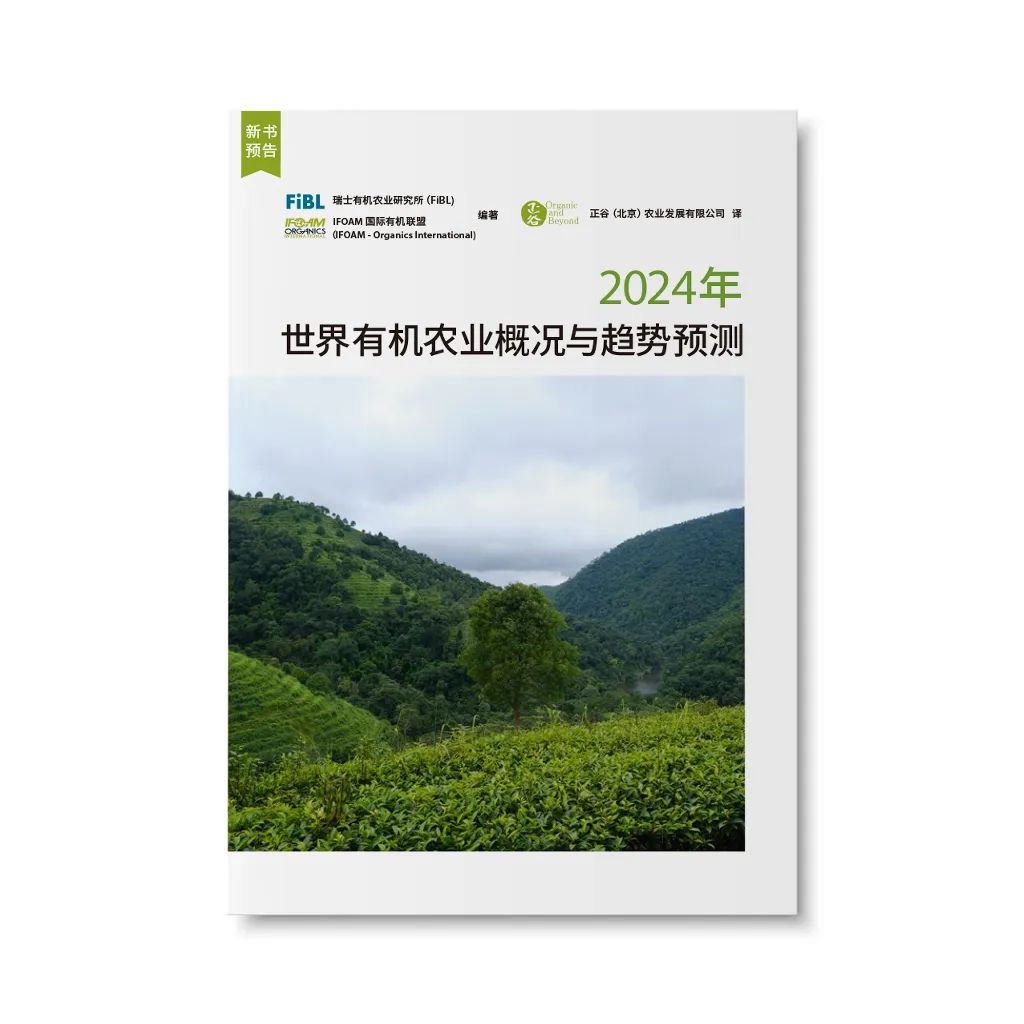
"The World of Organic Agriculture 2024Statistics and Emerging Trends"Information OverviewӨгүүлэл нь ...-аас авсанFOFCC-http://fofcc.org.cn/mn/23789/
01 Organic Agricultural LandӨгүүлэл нь ...-аас авсанFOFCC-http://fofcc.org.cn/mn/23789/
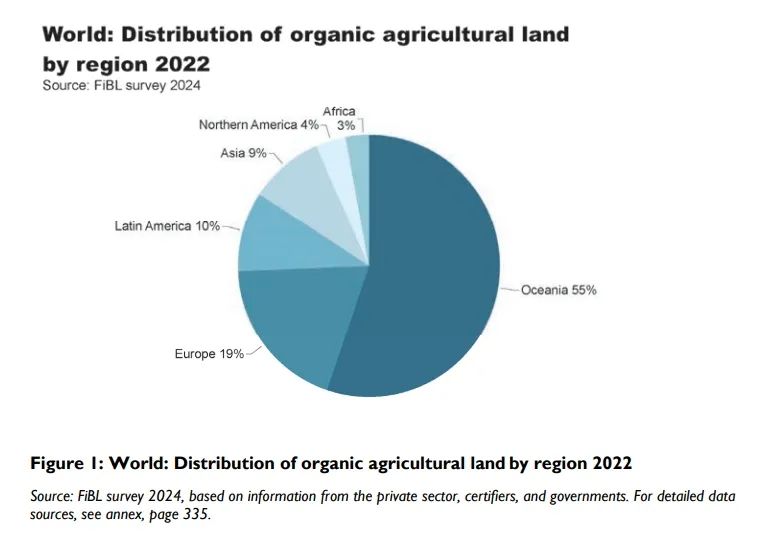
Image source: The World of Organic Agriculture Statistics and Emerging Trends Өгүүлэл нь ...-аас авсанFOFCC-http://fofcc.org.cn/mn/23789/
In 2022, the global organic agricultural land area exceeded 96.4 million hectares, an increase of 26.6% compared with 2021; among this, Oceania had the largest area at 53.2 million hectares, accounting for 55% of the global organic agricultural land area, followed by Europe with approximately 18.5 million hectares, accounting for 19%.Өгүүлэл нь ...-аас авсанFOFCC-http://fofcc.org.cn/mn/23789/
Australia is the country with the most organic agricultural land, with an estimated 97% of its farmland being extensive grazing areas; India ranks second, and Argentina ranks third.Өгүүлэл нь ...-аас авсанFOFCC-http://fofcc.org.cn/mn/23789/
Organic agricultural land accounts for 2% of all agricultural land globally. Liechtenstein, Austria, and Estonia are the top three countries by share, at 43.0%, 27.5%, and 23.4%, respectively.Өгүүлэл нь ...-аас авсанFOFCC-http://fofcc.org.cn/mn/23789/
02 Organic Market SizeӨгүүлэл нь ...-аас авсанFOFCC-http://fofcc.org.cn/mn/23789/
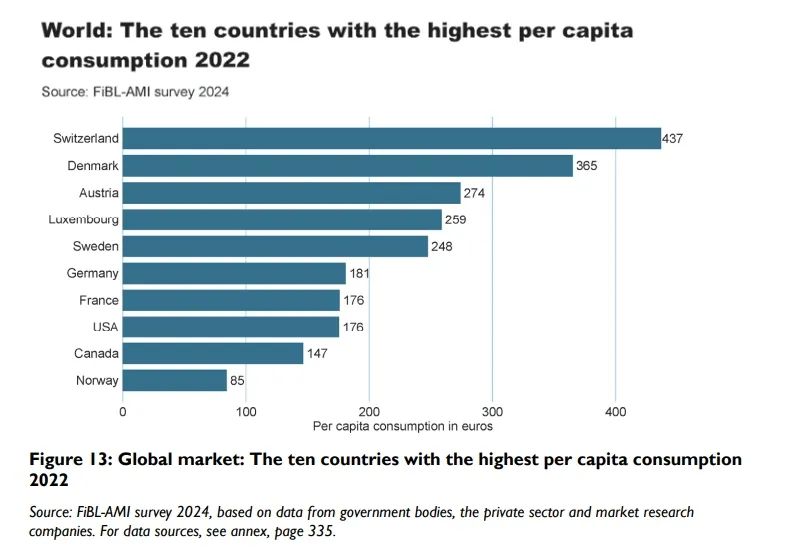
Image source: The World of Organic Agriculture Statistics and Emerging Trends
In 2022, global sales of organic food and beverages reached 134.8 billion euros, an increase of 7.8% over the previous year; the largest market for organic food was the United States (58.6 billion euros), followed by Germany (15.3 billion euros), China (12.4 billion euros), and France (12.1 billion euros). In terms of the share of the organic market in the overall market, the leader was Denmark (12.0%), followed by Austria (11.5%) and Switzerland (11.2%). In 2022, global per capita consumption of organic products was approximately 17 euros; Switzerland ranked first at 437 euros, followed by Denmark at 365 euros, Austria at 274 euros, and Luxembourg at 259 euros. As of 2022, China's per capita consumption was 9 euros.
03 Organic Regulations and Laws
In 2022, 75 countries had fully implemented organic agriculture regulations, 21 countries had regulations but had not yet fully implemented them, and 14 countries were drafting relevant regulations. The EU's new organic regulation (EU) 2018/848 has had a huge impact on the rules for organic farmers worldwide, affecting tens of thousands of organic farmers. After a lengthy revision process, the EU's new organic regulation (EU) 2018/848 was published in June 2018 and became applicable from January 1, 2022. Among the objectives and principles of the new organic regulation, content encouraging distribution channels and local production was added. Among these principles, the soil-related production concept was strengthened, and emphasis was placed on “contribution to the environment,” “long-term fertility,” and “biodiversity.” Another new principle is to encourage the use of organic plant reproductive materials and animal breeds with high genetic diversity and disease resistance. Under the new regulation, there are two systems for importing organic products from outside the EU: trade agreements. All third countries currently recognized as equivalent must renegotiate the terms of trade agreements under the new EU procedure.Өгүүлэл нь ...-аас авсанFOFCC-http://fofcc.org.cn/mn/23789/
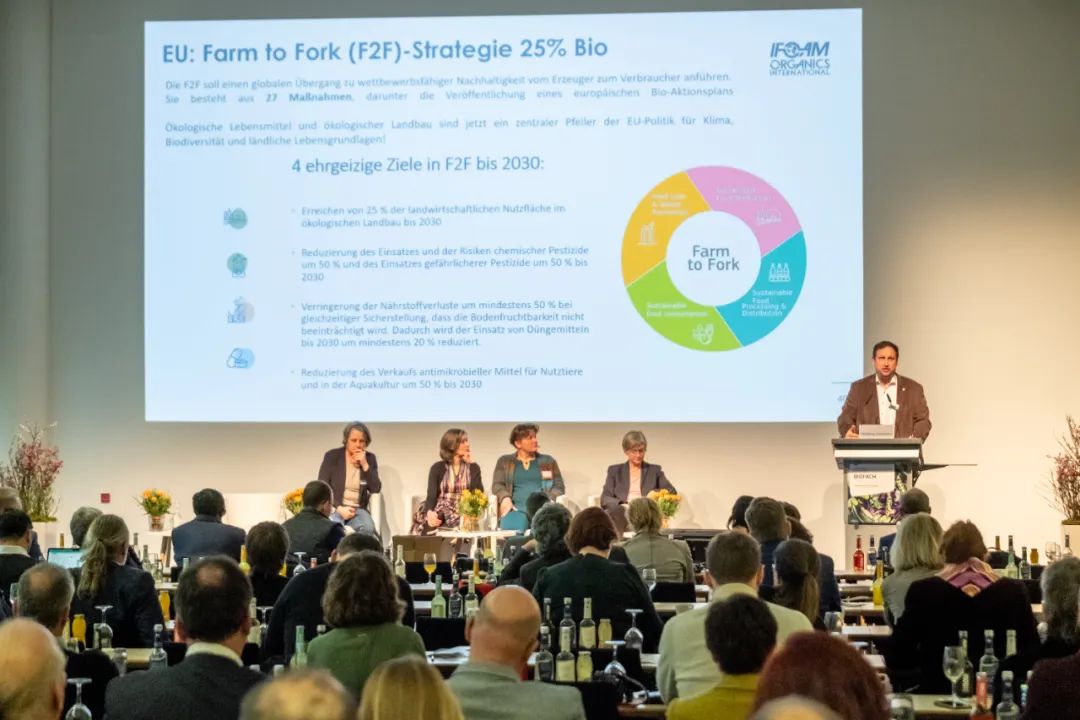
Image source @BioFach
This year's BioFach released two major industry trends: ① Holistic. Climate. Regeneration. This trend is about the holistic circular system as part of the solution to climate change, including regenerative agriculture based on organic farming; ② Personal health and planetary health. It is not only about personal health, but also about treating the natural balance through a diet that supports the health of the global environment. In addition, it also emphasizes that achieving healthy aging through conscious healthy eating is a major trend in the industry's future development. For a long time, the food and agriculture system has been considered one of the sectors most negatively affected by climate change; correspondingly, however, according to the global food greenhouse gas emissions database EDGAR-FOOD, global food system emissions in 2015 were 18 billion tonnes of CO2 equivalent, accounting for 34% of total greenhouse gas emissions. Therefore, controlling carbon emissions from food production and related links is one of the important solutions to the climate problem. At the same time, organic agriculture, as a sustainable agricultural model, follows local ecological rhythms, biodiversity, and natural cycles without relying on inputs that bring adverse effects, and can maintain soil, ecosystems, and human health. It has enormous potential and advantages in controlling carbon emissions.Өгүүлэл нь ...-аас авсанFOFCC-http://fofcc.org.cn/mn/23789/
Reprinted from: Zheng GuӨгүүлэл нь ...-аас авсанFOFCC-http://fofcc.org.cn/mn/23789/
Өгүүлэл нь ...-аас авсанFOFCC-http://fofcc.org.cn/mn/23789/