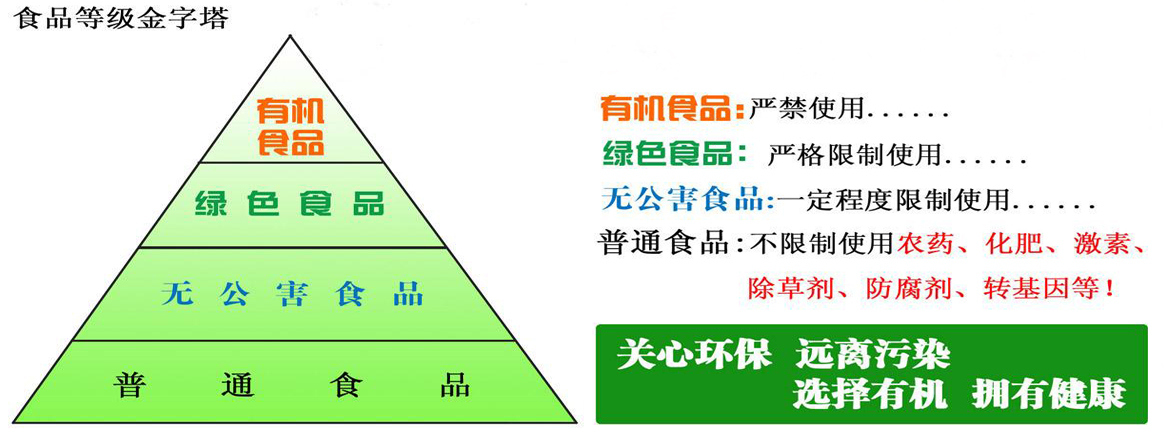
Organic food, green food, and pollution-free food are a set of concepts related to food safety and the ecological environment.文章源自FOFCC-http://fofcc.org.cn/en/11209/
Organic food is produced without the application of artificially synthesised chemical substances, utilising a series of sustainable agricultural technologies to reduce environmental and product contamination during production, whilst establishing a harmonious ecosystem between humans and nature within the production process to promote biodiversity and the sustainable use of resources.文章源自FOFCC-http://fofcc.org.cn/en/11209/
Organic agricultural production involves not using artificially synthesised fertilisers, pesticides, growth regulators and livestock feed additives, nor employing organisms and their products obtained through genetic engineering. Instead, it follows natural laws and ecological principles, adopts a series of sustainable agricultural techniques, coordinates the relationship between crop farming and animal husbandry, and promotes ecological balance, species diversity and the sustainable utilisation of resources. Organic food originates from organic agricultural production systems, and comprises all agricultural and sideline products—including grain, vegetables, fruit, dairy produce, livestock and poultry products, aquatic products, bee products, and seasonings—that are produced and processed in accordance with organic agricultural production requirements and corresponding standards, and certified by a legitimate organic food certification body.文章源自FOFCC-http://fofcc.org.cn/en/11209/
Organic food goes by different names in different languages. The most common term abroad is organic food, while in other languages it is also referred to as ecological food or natural food. The Codex Alimentarius Commission (Codex) of the Food and Agriculture Organization of the United Nations and the World Health Organisation (FAO/WHO) collectively refers to such foods—which have various names but essentially the same meaning—as “organic food”, translated into Chinese as “有机食品” (organic food).文章源自FOFCC-http://fofcc.org.cn/en/11209/
Green food is produced through full-process technical standards—from pre-production to mid-production and post-production—and integrated tracking and monitoring of the environment and products. It strictly limits the use of chemical substances to safeguard food and environmental safety and promote sustainable development. It also adopts the management method of certification marks to regulate market order.文章源自FOFCC-http://fofcc.org.cn/en/11209/
Pollution-free food is a basic safety line established by the government to ensure the dietary health of the general public through a series of measures such as place of origin designation, product certification, and market access, striving to basically achieve pollution-free production of edible agricultural products nationwide within five years.文章源自FOFCC-http://fofcc.org.cn/en/11209/
China is a vast agricultural country with unbalanced economic development. In the new stage of building a moderately prosperous society in all respects, improving the quality and safety management system for agricultural products, raising the level of their quality and safety, and increasing their international competitiveness constitute a central task for agricultural and rural economic development. To this end, with the approval of the State Council, the Ministry of Agriculture fully launched the “Action Plan for Pollution-free Food” and established the development strategy of “integrating pollution-free food, green food, and organic food as a trinity to advance overall progress.” Therefore, organic food, green food, and pollution-free food are all integral parts of the work on agricultural product quality and safety.文章源自FOFCC-http://fofcc.org.cn/en/11209/